Place of Origin: Guangdong, China
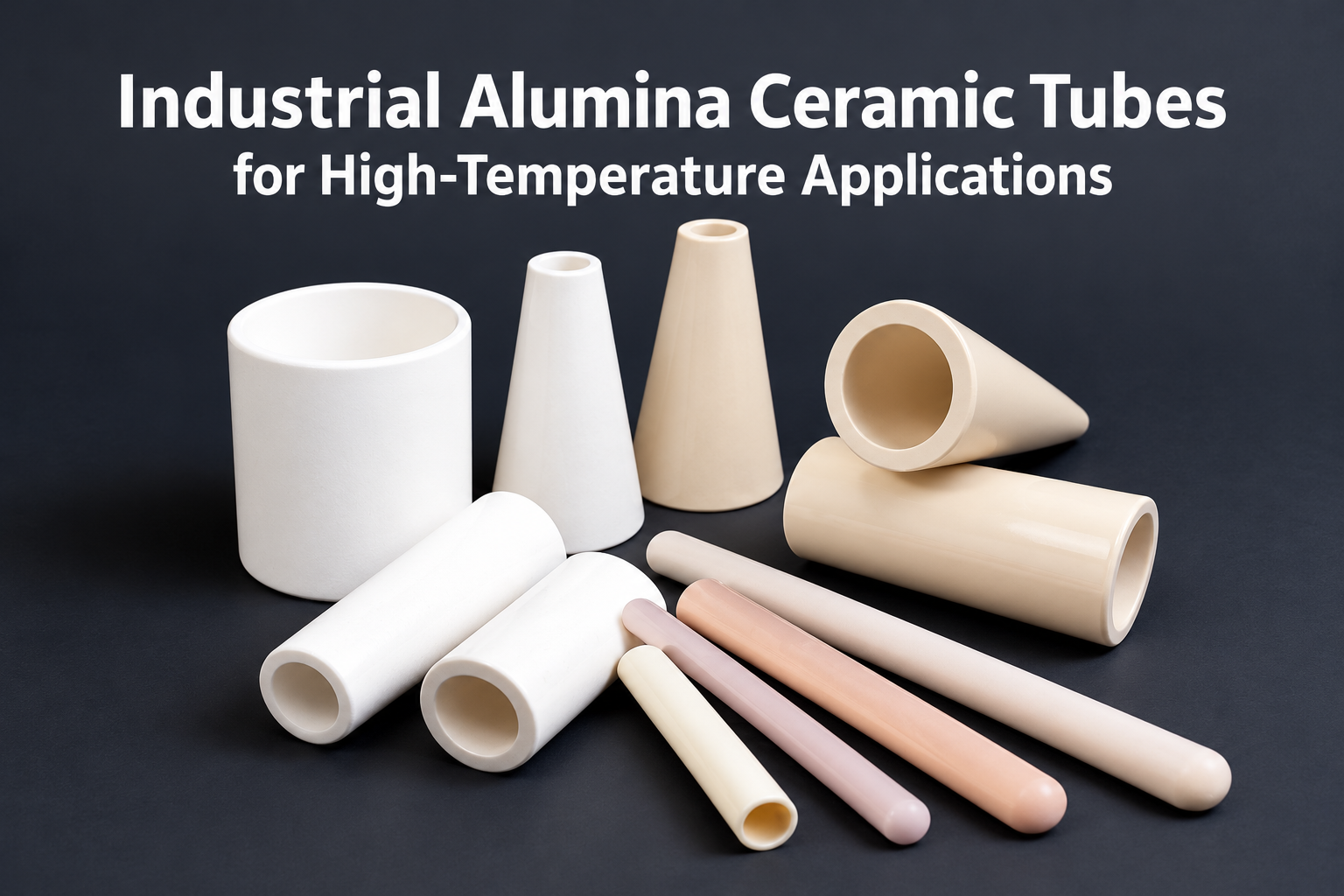
Product Material: 95%–99.8% High-Purity Alumina (Al₂O₃). Our industrial alumina ceramic tubes are available in different material grades to meet specific requirements for high-temperature resistance, electrical insulation, and mechanical performance.
Key Features: Excellent heat resistance, electrical insulation, wear resistance, corrosion resistance, and dimensional stability. Custom alumina ceramic tubes can be manufactured with specified outer diameters, inner diameters, lengths, and precision machining according to customer drawings.
Applications: Alumina tubes are used in industrial furnaces, high-temperature heating equipment, electrical insulation systems, thermocouple protection, laboratory equipment, and precision machinery. Explore our industrial ceramic tubes for more material and product options.
Global OEM Supply: CERAMPRO supplies industrial alumina ceramic tubes and custom ceramic components for equipment manufacturers. Serving OEM customers in the USA, Germany, Japan, and Europe.
Delivery Time: Production and delivery schedules depend on material grade, dimensions, order quantity, and machining requirements. Contact us with your drawings or specifications for an estimated lead time.
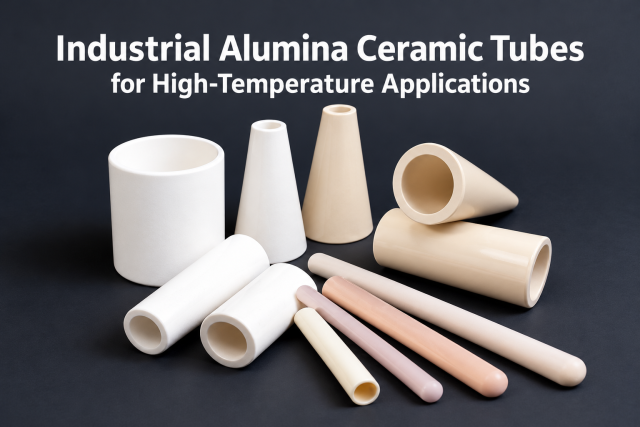
Industrial alumina ceramic tubes are made from 95%–99.8% Al₂O₃ and used in high-temperature furnaces, electrical insulation systems, and industrial heating equipment. They help protect sensitive components from heat, electrical contact, and exposure to certain chemicals. Available in different material grades, these tubes can be manufactured with custom outer diameters, inner diameters, wall thicknesses, and lengths to fit specific equipment designs.
We offer several alumina grades for different applications. The best choice depends on the working temperature, furnace atmosphere, and how the tube will be used.
| Material Grade | Main Consideration | Common Applications |
|---|---|---|
| 95% Al₂O₃ | Practical and economical for general industrial use | Standard ceramic tubes |
| 96% Al₂O₃ | Good balance of performance and manufacturing flexibility | Insulating tubes and sleeves |
| 99% Al₂O₃ | Higher purity for more demanding environments | Furnace protection tubes |
| 99.5%–99.8% Al₂O₃ | High-purity options for specialized processes | High-temperature processing equipment |
Higher purity is not always necessary. We can help review your application and select a suitable grade. You can also explore our alumina ceramic components for other industrial applications.
Alumina furnace tubes are used to protect components, provide insulation, and support parts inside industrial heating equipment.
These ceramic insulation tubes help separate heating elements and electrical conductors from surrounding metal components, especially where plastic insulation cannot withstand the temperature.
Alumina tubes can protect thermocouples from direct contact with furnace atmospheres and process materials. Different tube designs are available depending on the installation.
Corundum tubes are also used in laboratory furnaces, testing equipment, and thermal processing systems where heat resistance and material stability are important.
For other drawing-based ceramic components, see our structural ceramic parts.
The following specifications provide general material-selection guidance for industrial alumina ceramic tubes. Actual values depend on the selected grade, manufacturing process, and service conditions.
| Parameter | Technical Indicator | Functional Significance |
|---|---|---|
| Purity Grade | 95%–99.8% Al₂O₃ | Different grades for industrial requirements |
| Max Service Temperature | Approx. 1450–1750°C, grade-dependent | High-temperature operation under suitable conditions |
| Gas Tightness | Dense grades; verification required | Vacuum and controlled-atmosphere applications require specific testing |
| Thermal Shock Resistance | Moderate | Controlled heating and cooling recommended |
| Hardness | Approx. 9 Mohs | Resistance to surface abrasion |
| Chemical Resistance | Good, medium-dependent | Compatibility depends on chemicals and operating temperature |
| Dielectric Strength | Approx. 15–20 kV/mm, grade-dependent | Electrical insulation under specified test conditions |
| Dimensions | Custom OD, ID, wall thickness, and length | Supports equipment-specific installation |
Note: Technical values are indicative rather than guaranteed specifications. Maximum operating temperature, gas tightness, dielectric strength, and chemical compatibility must be confirmed for the selected material grade and application.
Alumina is a common choice for industrial ceramic tubes, but other materials may be more suitable for certain applications.
| Material | Main Characteristics | Typical Selection Reason |
|---|---|---|
| Alumina (Al₂O₃) | Good electrical insulation, hardness, and heat resistance | General high-temperature and insulating applications |
| Quartz | Low thermal expansion and good thermal shock resistance, particularly fused quartz | Applications with rapid temperature changes |
| Silicon Carbide (SiC) | Higher thermal conductivity than alumina in many grades | Applications requiring efficient heat transfer |
| Zirconia (ZrO₂) | Higher fracture toughness and lower thermal conductivity than alumina in many grades | Applications requiring fracture resistance or reduced heat transfer |
The right material depends on the temperature, working environment, and function of the tube. Explore our industrial ceramic tubes for more options.
They are widely used in industrial furnaces, heating equipment, electrical insulation, thermocouple protection, and laboratory systems.
It depends on your application. For many standard industrial uses, 95% or 96% alumina may be sufficient. Higher-purity grades are available for more demanding processes.
Yes. We can produce custom sizes and review the required tolerances based on the tube dimensions and machining process.
Yes, provided the material grade is suitable for the working temperature and furnace conditions. We recommend confirming the operating details before selecting a grade.
Dense alumina tubes can be used in certain vacuum furnace applications. If gas tightness is critical, please let us know so the requirements can be reviewed.
Yes. We work with OEM customers in the USA, Germany, Japan, and other European markets, supplying custom alumina ceramic tubes based on their drawings and specifications.
Please send us your drawings, required dimensions, material grade, quantity, and operating temperature. If you have special tolerance or inspection requirements, include those as well.
Need custom alumina ceramic tubes? Send us your drawings and quantity. We'll review the details and provide a quotation.